

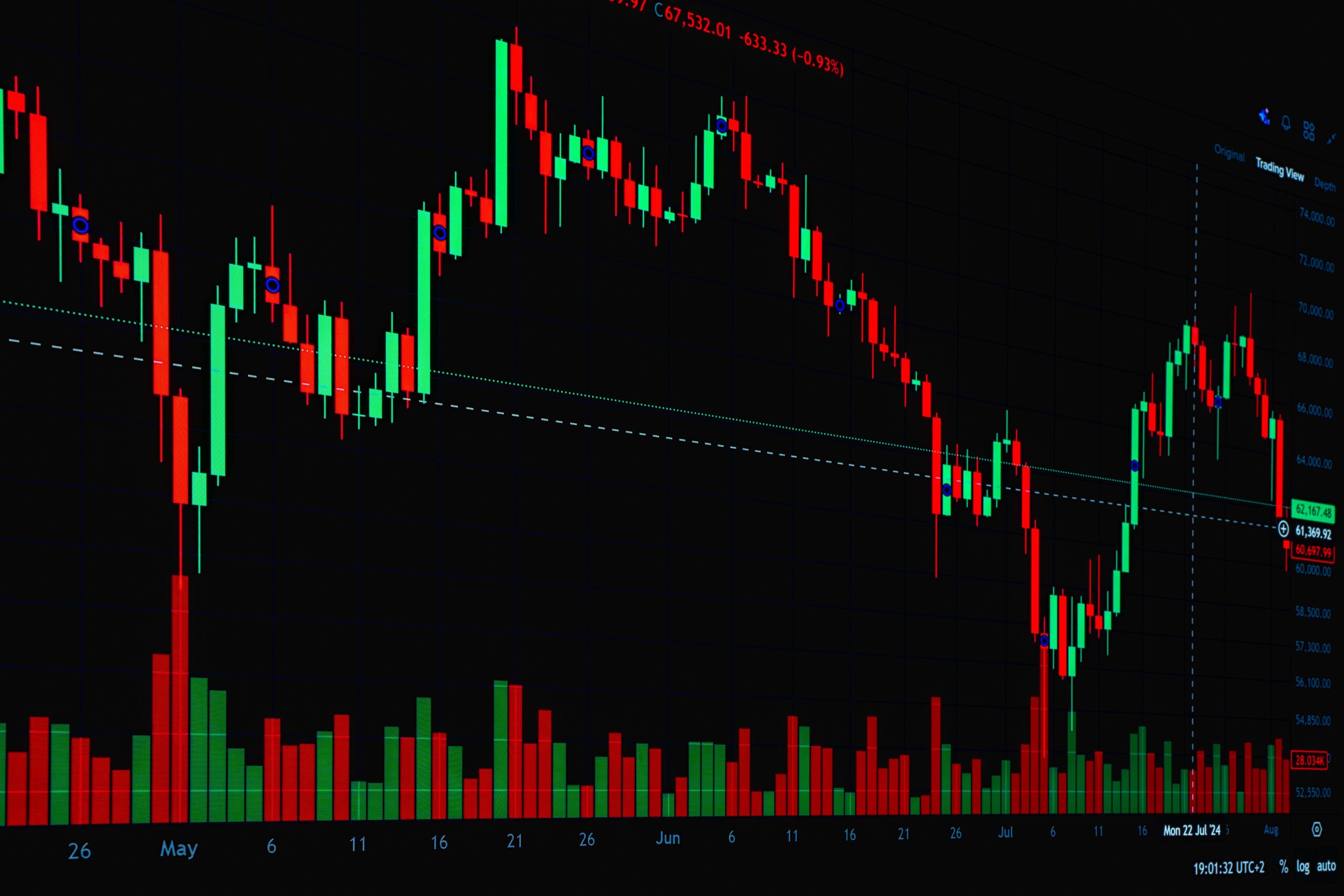
The Indian stock market suffered heavy losses with Nifty 50 and Sensex falling by more than 1.5% due to higher bond yields abroad and fluctuating oil prices. The proposed changes in insurance commission regulations led to selling pressure, which increased the downtrend of the year.
Indian stock market saw sharp decline during Thursday’s trading session on September 24, with both key benchmarks having fallen below important psychological barriers by closing over 1.5% down, thus wiping out any gains recorded in previous sessions. Investors were rattled by rising yields on international bonds and oil price swings.
After Thursday’s fall, the Nifty 50 and Sensex recorded their biggest single-day losses in 10 weeks and their year-to-date losses increased to close to 12%. This puts them on course to register their first annual loss in more than a decade.
In addition to the poor global signals, the Insurance Regulatory and Development Authority of India (IRDAI) came up with sweeping changes to the insurance commissions structure, causing a rush of selling of stocks in financials/NBFCs.
Stock market in India today
Nifty 50 fell by 1.64% and closed at 25,169.50 whereas Sensex closed at 73,580, registering a loss of 1.67%. It was even worse for the mid-cap and small-cap companies; Nifty Midcap 100 lost 2.57% whereas Nifty Smallcap 100 fell by 2.25%.
The top sectorial indices finished trading the session on a significantly lower note with the banking and insurance sectors suffering the most due to the proposal from the insurance regulator of the nation to introduce changes in the commission system by capping payments, tying it to the complexity of the product and extending commission period for life insurance companies.
Banking and financial stocks dropped 2% and 2.4% individually. Individual stock wise, the hardest hit were PB Fintech that plummeted 36% and Turtlemint Fintech that declined 20%.
Indian stock market was under selling pressure, along with rising tensions in international bond market. US 10-year treasury bond yield stabilized at 5.12% during Thursday’s trading session, after a sharp rise of 15 basis points on Wednesday – which is the largest gain in one day since April 2025 tariff shock by President Donald Trump.
An increase in bond yields was witnessed alongside a sharp increase in oil prices, further putting pressure on financial markets around the world. With regard to energy trade, US benchmark oil surged by 2.35% to $94.33 a barrel, whereas international benchmark Brent oil climbed by 2.77% to $106.94 a barrel.
Mixed sentiment in Asia; will Nikkei surpass 67,000 while Hang Seng remains range-bound?
In addition to Asia’s other stock markets, the benchmark Nikkei 225 in Japan was up by 0.8% to 65,513.99, as some computer-chip producers enjoyed the sustained focus on artificial intelligence. The S&P/ASX 200 in Australia declined by 0.7% to 8,702.00.
The Hang Seng in Hong Kong dropped by 0.3% to 24,761.13, and the Shanghai Composite slipped by 1.2% to 3,888.37. In South Korea, the market was closed for the Chuseok harvest festival.
According to Vipin Kumar, AVP-Research at Globe Capital Market, the Nikkei index was up and was approaching the upper boundary of its month-long consolidation range which is at the 67,000 mark.
An upside breakout from 67,000 can propel the index to the 69,000-69,500 range in the short run. Short-term support is identified in the vicinity of 64,500.
As for the Hang Seng index, he stated that the Hang Seng index edged down slightly as discussed in the previous post. Looking forward, we restate our sideways bias on the stock index in the 24,350-25,250 spot range.
Bullish outlook: Can bulls protect 23,000 amid growing bearish pressure?
According to Rupak De, Senior Technical Analyst at LKP Securities, the index was under heavy selling pressure as negativity was coming due to the overnight weakness, caused by an increase in US 10 year bond yields and crude oil prices.
The index has broken down below its swing low and the bears were gaining ground with more unwinding of long positions. He has pointed out that RSI has again become bearish. The next level of support is at 23,000 and below that, the index can decline towards 22,700. Resistance is placed at 23,200.
In this context, Vipin Kumar observed that the Nifty fell further down towards 23,000 levels amidst the steep rise in US bond yields along with the rising price of crude oil, after a quick rebound towards the price resistance range of 23,450 to 23,600.
As per him, until the index closes below the spot range of 23,500 to 23,600, the technical picture remains negative. The support for prices stands at the spot range of 23,100 to 23,000, and a close below this spot range shall remain a negative signal which could push the index towards 22,500 to 22,400 levels in the short term, he pointed out.
VP – Technical Research at Choice Equity Broking Private Limited Sachin Gupta pointed out that the range of 73,000-73,250 will become very important to stop further decline of the Sensex, while 73,850-74,000 will act as a hurdle. If the Sensex crosses above 74,000, it would relieve the index and help to strengthen the structure. But, on the other hand, a move below 73,000 will make the ongoing weakness persistent, he added.